
You could probably write a whole thesis on break-in and theft protection. There's a huge range of accessories out there to buy, but their effectiveness is often disputed within the camping community and among experts too. Some see protective measures as essential, others as pointless, and some even worry that a thief showing up with heavy equipment to crack these security devices could end up causing even more damage.
Security starts with your parking spot
In some countries, rest stops along the highway rank among the less safe places to park. City parking lots can be risky too. Especially when you're wild camping instead of staying at a campsite or fenced-in pitch, it pays to trust your gut.
If a spot doesn't feel right to us, we move on. We stick to this rule without exception, and after 7 years of wild camping, it's never let us down.
There's no such thing as 100 percent security
Let's be honest: if thieves really want to get in somewhere, they will. And if they're set on taking your vehicle, they'll find a way. There have even been cases where specific brands and models were stolen right out of fenced properties or locked garages, despite all sorts of security measures in place.
Some particularly brazen thieves have even driven off with fully packed vehicles right from outside someone's front door. And reports of gas attacks at rest stops keep popping up too.
With so many of these stories circulating in the media and Facebook groups, it's no wonder caravan and motorhome owners feel uneasy. Beyond the painful loss of the camper or valuables, there's often the lingering shock of knowing strangers broke into what feels like a second home.
That said, one thing needs to be clear upfront: camping is still one of the safest ways to travel, and cases of theft, break-ins, or robbery are the rare exception when you consider the hundreds of thousands of leisure vehicles rolling across Europe's roads every year. Statistically speaking, you're far more likely to be involved in a traffic accident — whether in a camper or a regular car — than to fall victim to thieves or robbers while camping. Our own experience backs this up too.
So with the tips below, we're not trying to scare you — we just want to show you the range of options out there for making life a bit harder for criminals, or maybe even stopping them in their tracks.
The security weak points on your motorhome
These are the spots thieves love to target:
Windows
Entrance door
Rear garage
Storage hatches
Roof hatches
On motorhomes: the driver's cab
Large windows can be pried open with something like a crowbar or a screwdriver, and door lock cylinders can be picked fairly easily with a lock pick.

In some cases, thieves also use digital technology to intercept the radio signal from your motorhome's key fob and replay it via a transmitter to the vehicle's receiver — and just like that, the door pops open. This method is known as a "replay attack" and affects all Iveco Daily and Fiat Ducato models from 2006 through 2018.
Resourceful thieves often simply hitch unsecured or poorly secured caravans to a tow vehicle they've brought along and drive off with them — frequently fully loaded, since the owners were planning an early departure the next morning. So no matter how excited you are to hit the road, make sure your caravan is properly secured even while it's still parked at home!
Mechanical and electronic security systems
To keep unwanted visitors out of your camper, specialist retailers offer a wide range of mechanical and electronic security systems:
Simple solutions like contact switches, strike plates and security profiles cost almost nothing and are easy to install yourself. These affordable products can already act as a first deterrent, but you should always combine several measures for the best effect.
Permanently installed anti-theft devices are of course more effective, but also pricier. Installation should always be handled by a specialist workshop. That does mean extra cost, but amateur installations can lead to water damage from improper fitting or poorly sealed drill holes.
Unfortunately, these issues usually only get noticed once damage has already occurred. So this isn't the place to cut corners.
Alarm systems
The range for motorhomes and caravans spans from simple contact switches to highly sophisticated wireless alarm systems.
Contact switches for windows and doors run on button cell batteries and come with a signal tone over 100 dB loud. High-quality wireless alarm systems, however, offer noticeably more reliable protection. They usually come with sensors on windows, doors and roof hatches, and often motion detectors too. Besides an ear-splitting siren or horn sound, some devices also trigger your vehicle's indicators.
Some systems, such as the highly reliable alarm systems from Thitronik (currently the best on the market in our view), are also modular and can be expanded with gas detectors and tracking systems, for example. Ideally, choose an alarm system that still lets you move around inside the vehicle while it's armed. That also minimizes the risk of false alarms.
Tracking devices
With tracking systems (trackers) you can locate your vehicle in real time through various channels, such as a website, an app, and/or text messages. Tracking works via GPS or the mobile network, and sometimes even a combination of both.
These solutions aren't exactly cheap when it comes to purchase price and ongoing costs (usually a monthly or annual fee applies), but they're very effective if you go for a high-quality system.
Specialist retailers offer "stand-alone" devices at various price points and with different features that only report your vehicle's location. There are also alarm systems that can be upgraded with a tracking function, reporting not just the location but also the alarm system's status.
If possible, the tracking system should have a connection for an external antenna, since with built-in antennas the signal can get too weak due to the vehicle's body shielding it — the installation location is key to how well the tracking system works.
For vehicles with their own power supply, you should use a tracking system with a 12V connection. This guarantees a constant power supply. For caravans without a battery, there are also trackers on the German market that run on their own battery.
Watch out: More professional thieves now use jammers that can block the signal from tracking systems. So it's best to choose a device with a so-called anti-jamming function.
An affordable alternative for tracking
Some campers use Apple AirTags to track their vehicle. That only works, though, as long as there are Apple devices nearby.
The batteries last a very long time and you can hide an AirTag really well. It's not perfect, but it beats having no solution at all:
Module against "replay attacks"
On vehicle models like the Fiat Ducato, Citroën Jumper, Peugeot Boxer and Iveco Daily built between 2006 and 2018, thieves like to use so-called "replay attacks" . In short, the key fob's radio signal gets intercepted and then replayed to the vehicle's receiver using a transmitter — and the door unlocks.
To protect yourself against this, you should have an additional control unit installed that closes the vehicle-side security gap caused by uncoded key fobs. Once this module is linked to the central electrics, the key fob's insecure original electronics get swapped out for the included circuit board, and the vehicle can be locked and unlocked securely, protected by around 4 billion changing codes.
Gas detectors
Gas detectors such as propane/butane sensors, carbon monoxide sensors or combination units for these types of gas are generally safety-relevant accessories. As burglary protection, there are special anesthetic gas sensors, which are meant to prevent possible attacks using knockout gas.
Whether these attacks really happen is debated. Still, we think gas detectors are absolutely worth having, since gases always pose a certain risk in an (almost) enclosed space like a camper. Odorless carbon monoxide (CO) in particular can become deadly. When buying a gas detector, make sure the alarm is loud enough to wake you up if needed. Besides models that connect to your vehicle's onboard electrical system or battery, there are also gas detectors with their own battery.
As you can see, you actually need 2 gas detectors: one at floor level and one at a height of 1.5 m. That's why it makes more sense to buy a multi-sensor system.
Smoke detectors
Already installed at the factory in many new vehicles, smoke detectors warn you with a loud beep in case of fire and smoke. Just like at home, they're mounted on the ceiling in a camper and run on batteries. Unfortunately, we've noticed more than once that they love to go off during a slightly more intense cooking session. So we take our smoke detector down whenever we're frying something on high heat, and put it right back up after eating.
Window security
Good burglary protection for vulnerable pop-out windows comes from reinforced window profiles, which make it harder to pry the windows open. The profile is attached to the bottom edge of the window and connected to the frame on the inside. The window lock can be easily opened from inside the vehicle. Drill-free and screw-free versions are available in various lengths. For sliding windows, there are clamping bars that prevent them from being opened.
And applying special security window films makes it much harder to smash conventional windows. However, these films are only available for glass windows, and you should definitely check for proper certification. It's best to have the film applied by a specialist workshop.
Door security
To secure your doors, additional security locks are a good option. They're mounted either outside or inside and lock the entry doors with a second system. To mount them securely, holes need to be drilled into the vehicle.
Other mechanisms that are very easy to install, affordable, and effective:
Strike plates reinforce the bolts of the entry doors.
Door handles (grab rails) lock the door when folded in. Their cylinder locks make it harder to break into the entry door. Folded out, they also make it easier to get in and out.
Rods for securing the vehicle's cab doors: these connect the driver's and passenger's doors with a kind of “claw” inside the vehicle. This means the doors can no longer be opened from outside. These systems require no installation or drilling. If you want something simple and affordable, standard tie-down straps achieve a similar effect.
Securing loose items
For mobile items that need to be secured to the camper – like bikes, camping furniture, etc. – a wireless cable loop is a good option. It can be connected to existing alarm systems (e.g. from Thitronik) and draws attention if someone attempts theft.
Safe for valuables
Safes that are permanently glued or bolted into the vehicle protect important documents, cash, credit cards, or tech equipment from quick access. There are all kinds of safes, from small lockboxes with mounts for jewelry, cash, or passports to large safes big enough to hold a laptop.
Some models can be installed either lying down or standing up, while others are designed for mounting under the driver's/passenger's seat or inside a door. There are also “portable” safes available, which you slide into a mount and lock in place. This way, you can easily remove them from the vehicle when you don't need them.
Some safes can also be ordered with an electronic lock — really handy, since there's no key to lose. Depending on the mounting type, installing a safe may require drilling holes or gluing it down over a large surface area.
Wheel clamp
Wheel clamps are attached to one or more of the vehicle's wheels, as the name suggests, and are designed to prevent it from being driven away. They fit many tire sizes on both caravans and motorhomes, are relatively cheap, and also work as a visible deterrent.
Hitch and jack locks for caravans
A hitch lock blocks the handle of the caravan coupling, and on some models also the coupling head and/or the coupling jaw. This stops anyone from quickly hitching or unhitching the caravan without permission. Most systems can stay mounted even while driving. Another plus: while underway, it also stops the tow vehicle's coupling head from accidentally popping out of the caravan's coupling jaw!
You can also fit jack locks on top of that. These stop the support legs from being cranked up while parked, so anyone trying to tow the caravan away by force ends up causing serious damage — making it practically impossible to resell.
General safety tips
Don't sleep at rest stops
As mentioned earlier, the number of nighttime break-ins targeting motorhome and caravan owners is tiny compared to the number of people traveling. But when you do hear about such incidents, they've almost always happened at rest stops or highway parking areas — because thieves want to make a quick getaway after the fact.
That's why the police strongly advise against using these spots as overnight sleeping spots. Instead, head for official campsites or dedicated motorhome parking areas.
Trust your gut feeling
If something feels off, move on! Your inner voice can't always be explained with hard facts, but it's often right. Your subconscious picks up on things your conscious mind misses. So if you get a bad feeling, don't waste time debating it with yourself or your travel companions—just change your spot. Better safe than sorry!
Always lock up your vehicle
Even for a quick errand, and especially at night—lock all windows, exterior storage hatches, and roof hatches too.
Watch out: Thieves often strike in broad daylight, especially in tourist hotspots, at popular sights, or in unguarded parking areas. Stay extra alert in these spots.
Take valuables with you or stow them away
Cameras, credit cards, or travel documents left out in the open can tempt burglars. Store valuables where they can't be spotted through a window. Lock them in a properly secured safe, or just take them with you on your outing.
Keep your vehicle ready to move
To react quickly if things get dicey, police recommend parking your camper — when staying overnight outside campsites or secured pitches — in a way that lets you drive off fast. That means not lowering the caravan's stabilizer jacks on unguarded parking lots and always keeping your keys within reach.
Don't play the hero
If a burglar really does start fiddling with your vehicle while you're inside, or even manages to get in, please don't try to fight them off. In doubt, you'll come off worse, and no credit card in the world is worth that risk. Stay calm, hand over whatever valuables they demand, and make sure to memorize the license plate and a description of the person — the police can handle the rest.
Don't fall for staged "breakdowns"
One classic trick that keeps coming back: criminals fake a breakdown to rob helpful travelers. This might look like a car "broken down" on the roadside, or your own vehicle gets deliberately tampered with — for example, a tire that's suddenly flat after a rest stop. In situations like this, keep a close eye on your surroundings, keep the doors locked, and stash your valuables and cash somewhere they can't be grabbed in one quick move.
Several travelers have also told us that strangers on toll-free roads (in this case in Spain) waved wildly while driving to "point out" supposed — or deliberately caused — damage to their vehicle. When they pulled over to check it out, someone then tried to get into the vehicle's interior.
If such a 'warning attempt' seems fishy to you, don't stop right away — drive on to the next police station or gas station and check your vehicle there instead. That said, it's only fair to mention that plenty of people genuinely just want to help if something's wrong, no matter which country you're in!
Emergency numbers and contact points
If something does happen, these contacts can help:
Euro emergency number: 112(standard emergency number across Europe for police, fire department, and ambulance services)
Blocking Hotline for credit and bank cards, e-certificates, etc.:
within Germany: 116 116
from abroad: +49 116 116
online: sperr-notruf.de
Consulates, embassies & other diplomatic missions: German citizens get support from their diplomatic missions if they run into trouble abroad. You'll find the right contact point for your destination at: auswaertiges-amt.de
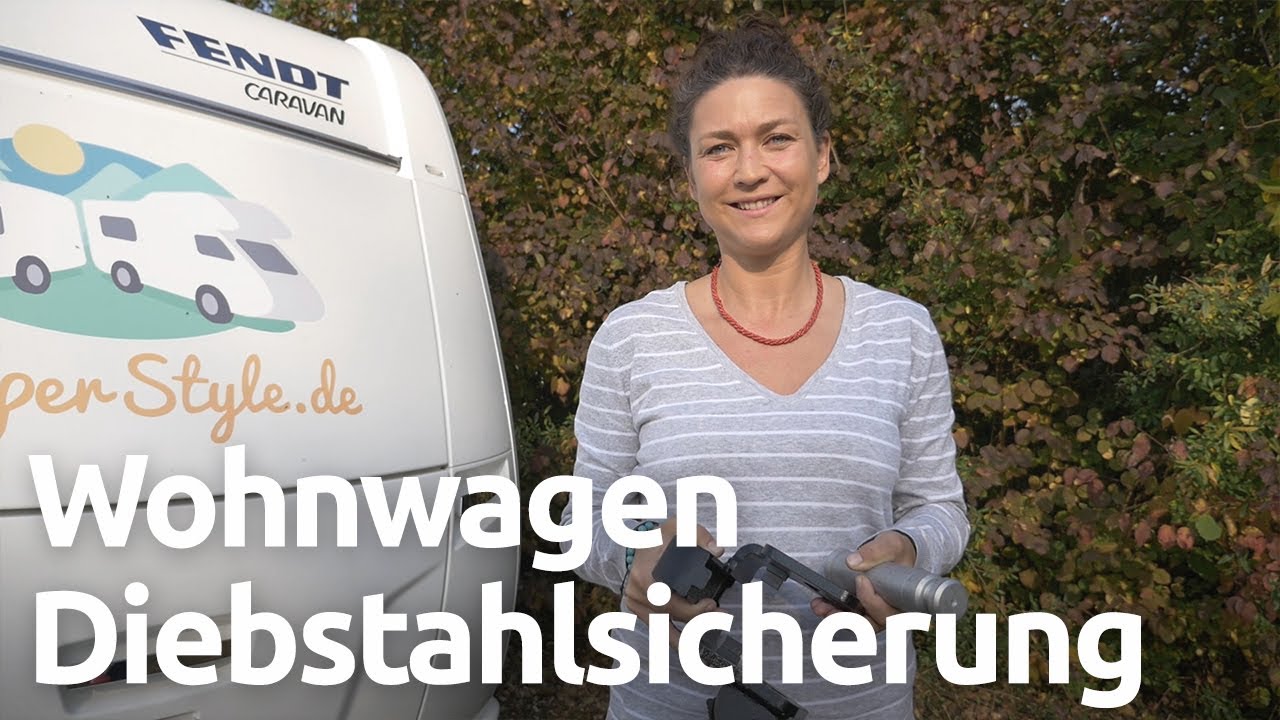
Video: Affordable theft protection
This video shows you which small helpers you can use without spending much money to set up a first line of defense against theft and break-ins, especially for caravans:
Podcast on "Safety and theft protection"
Sebastian and I also took a deep dive into "Safety and theft protection" in our podcast, sharing info and tips. Give it a listen!

Cover photo: © CamperStyle

0 Kommentare
Noch keine Kommentare — sei die/der Erste und teile deine Erfahrung!
Danke!
Dein Kommentar wartet auf Freischaltung und erscheint, sobald er moderiert wurde.